— Local rental system / 01
ChicagoIL / USA
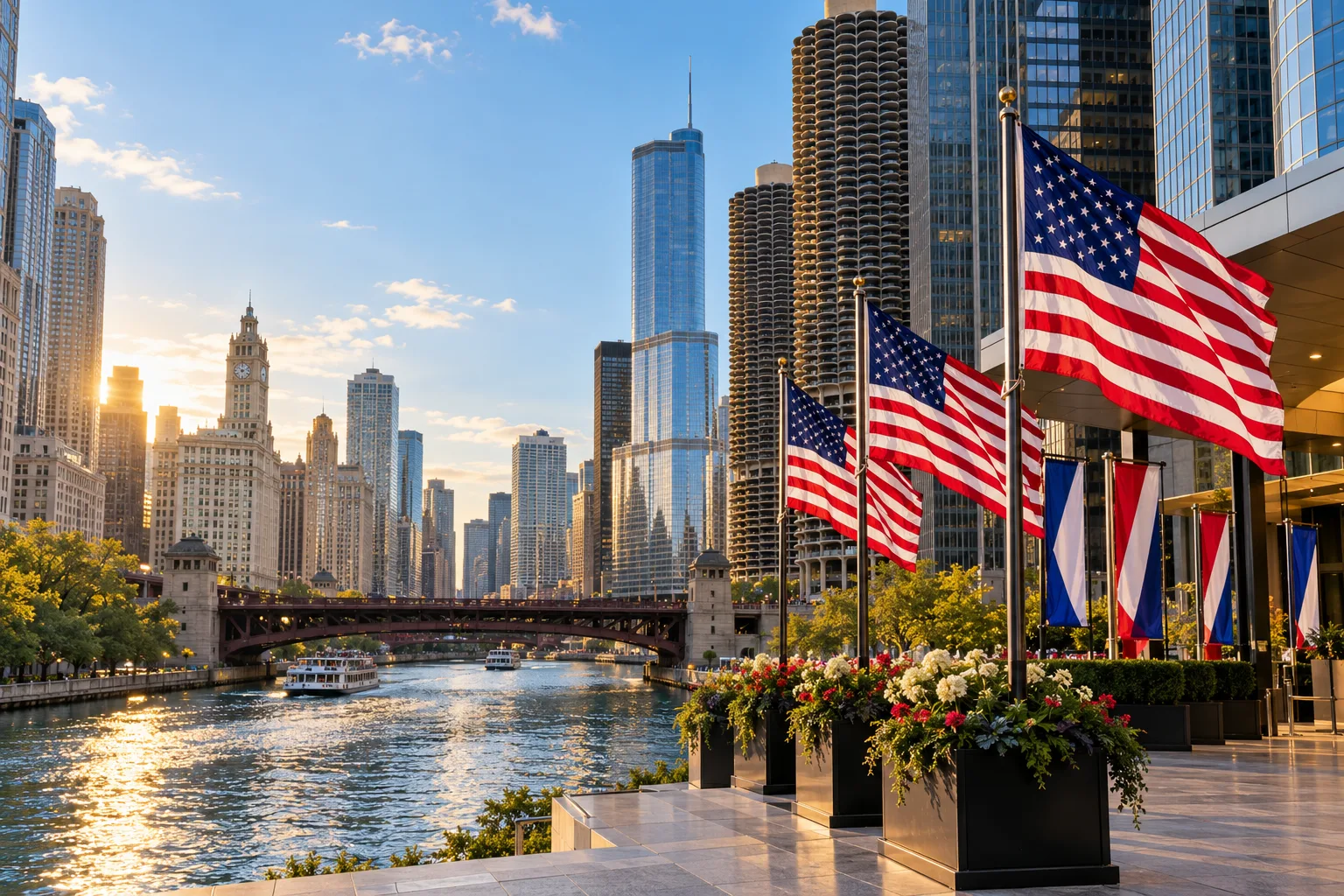
Street Pole Banners in Chicago.
A coordinated streetscape system for districts, campuses, and venues. Adapted to Chicago site conditions and operating constraints.
Turn a route into one coherent campaign while preserving the function and ownership rules of every pole.
Lakefront wind, dense downtown corridors, and large convention or festival footprints make wind loading and route visibility the primary design constraints.
A practical Chicago specification
| Display objective | Turn a route into one coherent campaign while preserving the function and ownership rules of every pole. |
|---|---|
| Placement logic | Prioritize arrival corridors and pedestrian sequences; rotate artwork only where the viewing direction and bracket orientation support it. |
| Local operating context | Downtown docks, union or venue rules, curb access, and public-event timing can matter as much as the flag design. |
| Seasonal exposure | Winter freeze, spring rain, humid summers, and lake-driven gusts call for different indoor and outdoor hardware plans. |
| Pre-installation check | Verify pole ownership, bracket compatibility, permits, installation access, banner dimensions, and a documented campaign rotation plan. |
| Hardware starting point | Heavy ballast, shortened exposed heights, reinforced cross-bases, and quick-removal procedures are strong defaults. |
What is included in planning
Planning basis: This guide applies publicly available regional weather context and site-planning principles; it does not claim completed work in Chicago. Final hardware, permits, and placement require venue approval and a site assessment. Check current conditions with the National Weather Service and long-term context from NOAA U.S. Climate Normals.
Questions about Street Pole Banners in Chicago
Prioritize arrival corridors and pedestrian sequences; rotate artwork only where the viewing direction and bracket orientation support it. In Chicago, the plan must also account for this local context: Lakefront wind, dense downtown corridors, and large convention or festival footprints make wind loading and route visibility the primary design constraints.
Heavy ballast, shortened exposed heights, reinforced cross-bases, and quick-removal procedures are strong defaults. Final selection depends on the exact surface, exposure, duration, and venue rules.
Send the address or venue, dates, operating hours, desired quantity, artwork status, installation surface, loading instructions, and the person authorized to approve placement.
— Other services / 03
Build the complete arrival.
Related rental systems available for the same Chicago site plan.