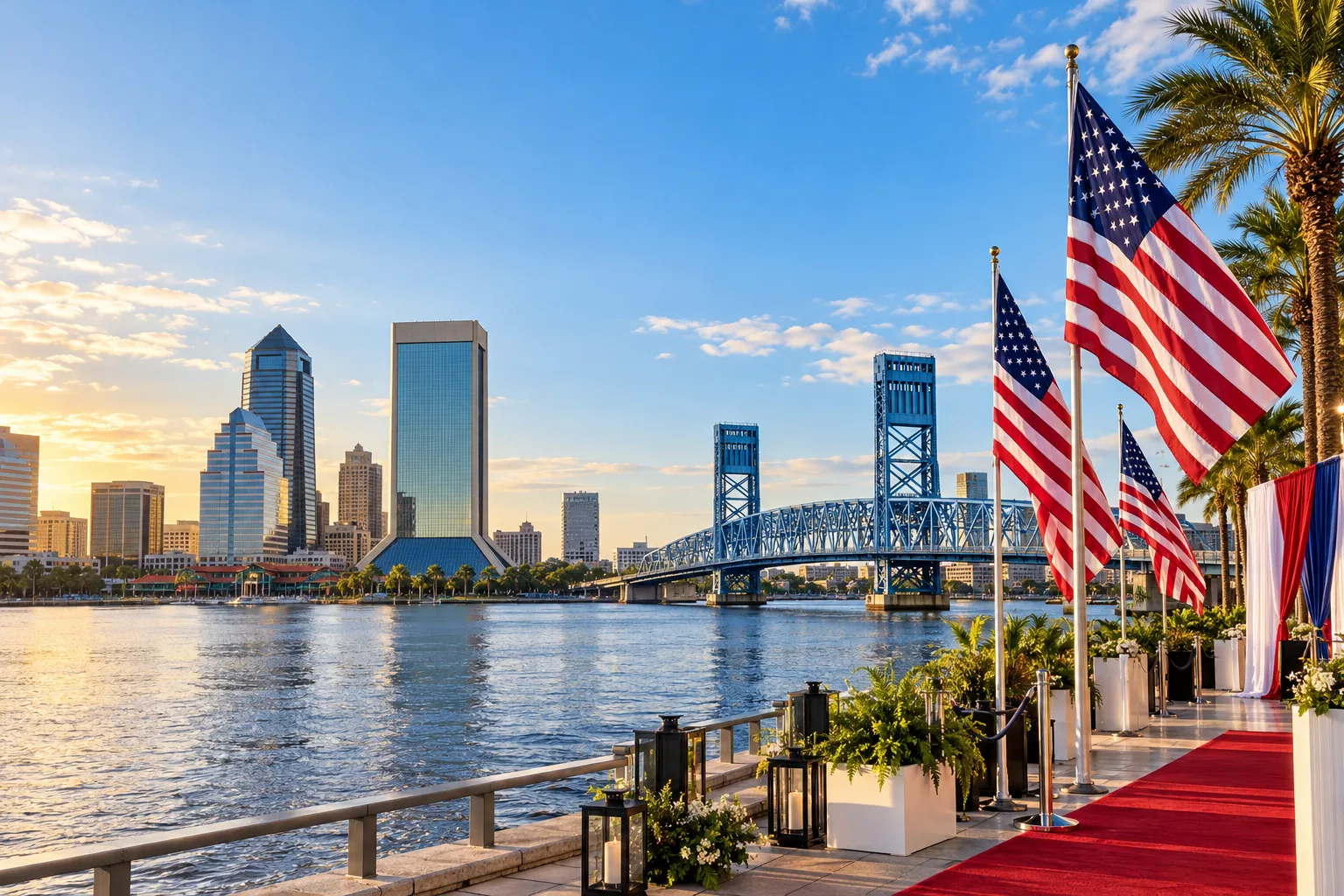
— Southeast planning guide / 01
JacksonvilleFL / USA
Flag rentals in Jacksonville.
A site-specific guide to commercial and event flag displays in Jacksonville, FL.
A useful flag plan for Jacksonville starts with the conditions guests and installation crews will actually encounter.
Coastal wind, humidity, heavy rain, and broad waterfront or suburban sites make weather resistance and long-route visibility essential.
What changes the display plan in Jacksonville?
| Operating environment | Coastal wind, humidity, heavy rain, and broad waterfront or suburban sites make weather resistance and long-route visibility essential. |
|---|---|
| Seasonal planning | Tropical weather and summer storms require a documented removal trigger and protected storage close to the display area. |
| Access and logistics | Large parking fields, waterfront exposure, and distributed entrances often need repeated markers rather than one large display. |
| Hardware starting point | Corrosion-aware fittings, drainage-friendly ballast, reinforced bases, and high-contrast wayfinding flags are sound defaults. |
Where flag displays fit best
Planning basis: This guide applies publicly available regional weather context and site-planning principles; it does not claim completed work in Jacksonville. Final hardware, permits, and placement require venue approval and a site assessment. Check current conditions with the National Weather Service and long-term context from NOAA U.S. Climate Normals.
— Local planning / 03
Services shaped around the site.
Choose a display system, then use the local page to plan its fit for Jacksonville conditions.
Planning questions for Jacksonville
Coastal wind, humidity, heavy rain, and broad waterfront or suburban sites make weather resistance and long-route visibility essential.
Corrosion-aware fittings, drainage-friendly ballast, reinforced bases, and high-contrast wayfinding flags are sound defaults.
Large parking fields, waterfront exposure, and distributed entrances often need repeated markers rather than one large display. The final call should also reflect the current forecast and the venue’s own rules.