— Local sector program / 01
NashvilleTN / USA
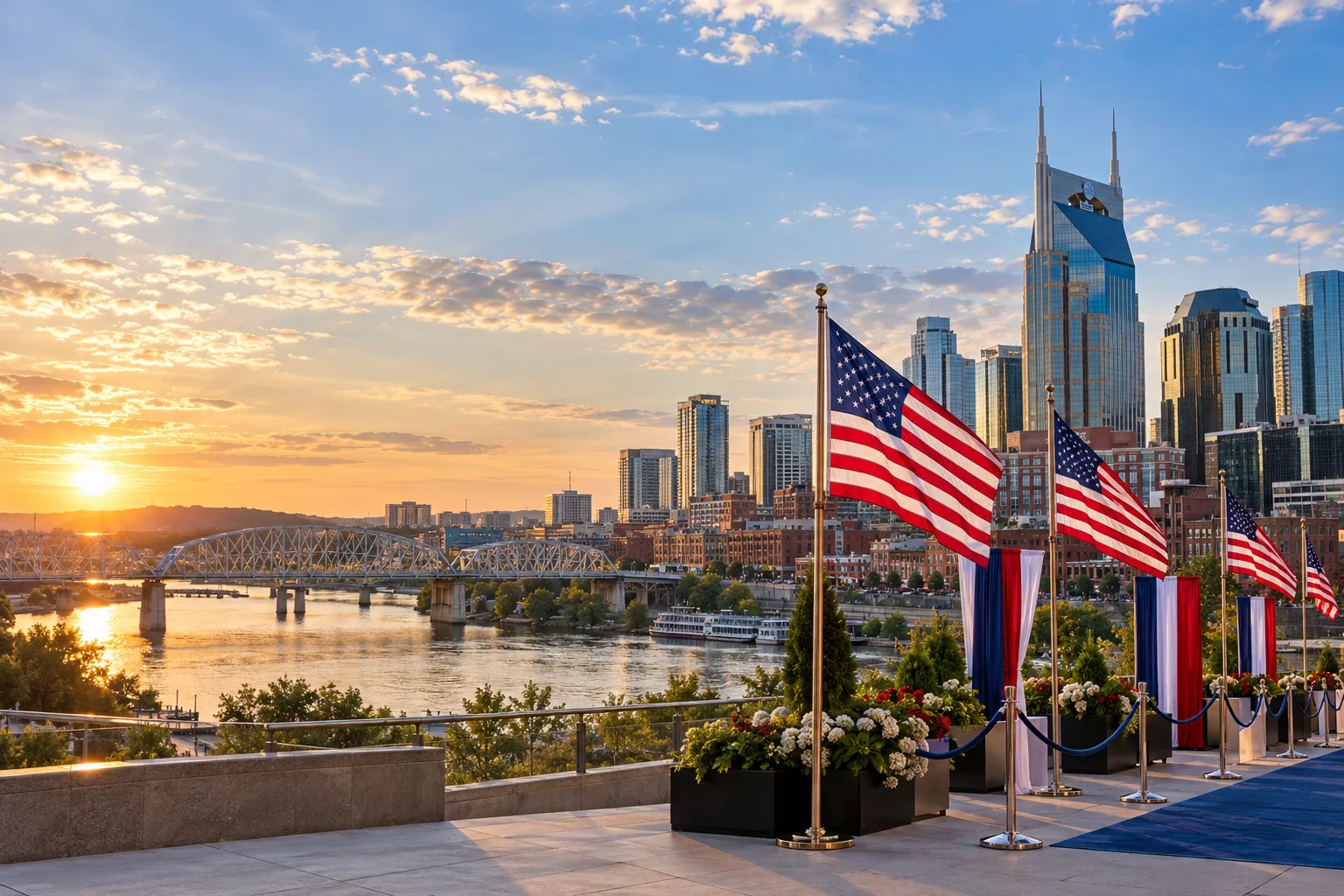
Flags for Festivals in Nashville.
Site navigation, entry sequences, and sponsor systems. Designed around Nashville operating conditions.
Translate a complex site map into visible arrival, sponsor, program, and exit zones.
Live-event density, humid heat, sudden storms, and busy entertainment corridors make production coordination the central task.
How the Nashville program should work
| Guest journey | Translate a complex site map into visible arrival, sponsor, program, and exit zones. |
|---|---|
| Operating coordination | Align with production, security, medical, vendor, and weather plans before the first flag position is approved. |
| Local site conditions | Live-event density, humid heat, sudden storms, and busy entertainment corridors make production coordination the central task. |
| Seasonal plan | Spring storms and hot summers require flexible setup calls, weather monitoring, and nearby storage for rapid removal. |
| Hardware direction | Portable weighted systems, sponsor flag families, high-contrast wayfinding, and fast-change graphics fit event-driven programs. |
| Day-of priority | Align with the production schedule |
Likely site contexts
Recommended rental systems
Planning basis: This guide applies publicly available regional weather context and site-planning principles; it does not claim completed work in Nashville. Final hardware, permits, and placement require venue approval and a site assessment. Check current conditions with the National Weather Service and long-term context from NOAA U.S. Climate Normals.
Questions for Festivals teams
Translate a complex site map into visible arrival, sponsor, program, and exit zones. The local environment adds this requirement: Live-event density, humid heat, sudden storms, and busy entertainment corridors make production coordination the central task.
Align with production, security, medical, vendor, and weather plans before the first flag position is approved. For Nashville, artist access, guest queues, sponsor zones, hotel docks, and street-event schedules should share one placement map.
Spring storms and hot summers require flexible setup calls, weather monitoring, and nearby storage for rapid removal. The quote should identify who can pause, relocate, or remove each outdoor display.