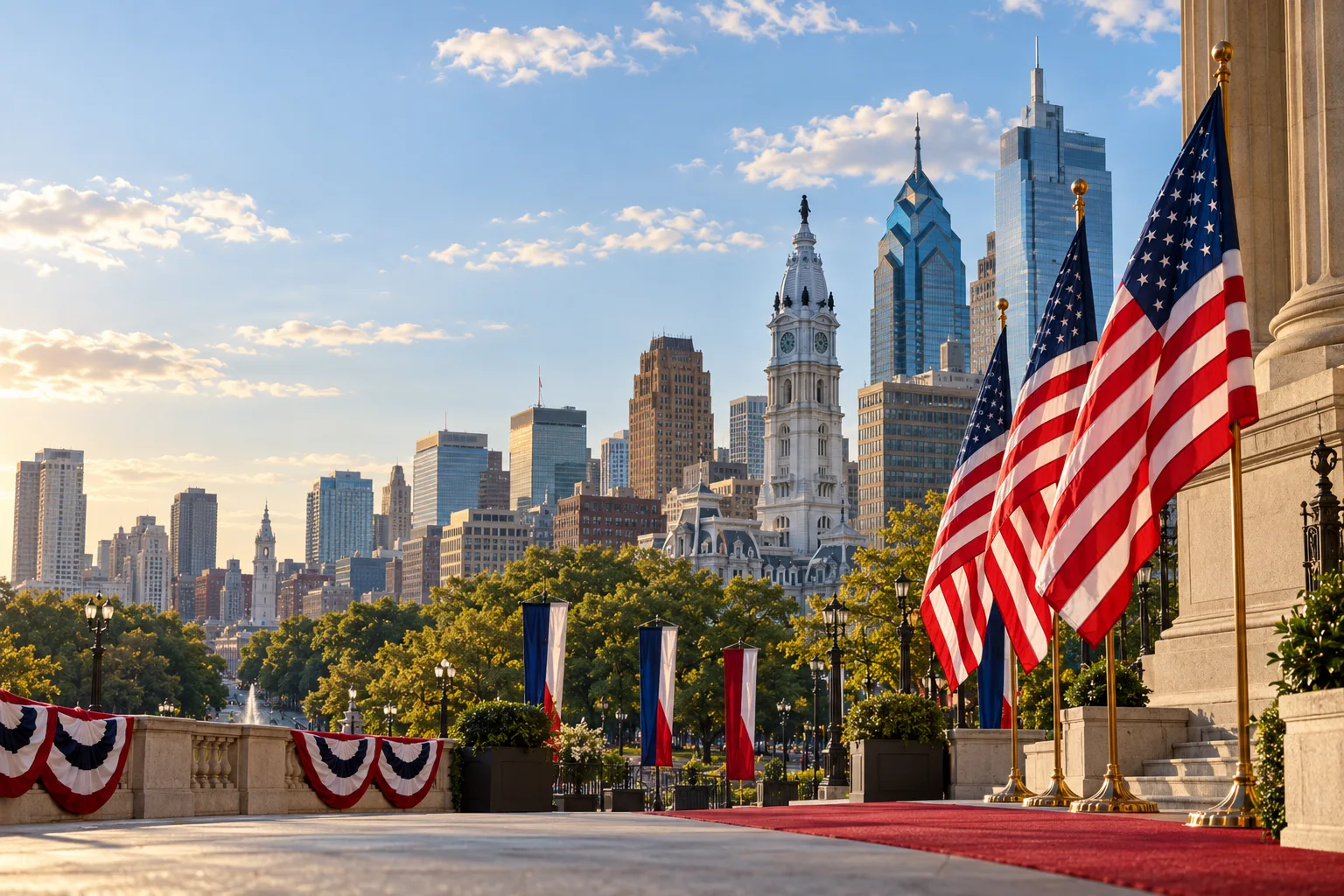
— Northeast planning guide / 01
PhiladelphiaPA / USA
Flag rentals in Philadelphia.
A site-specific guide to commercial and event flag displays in Philadelphia, PA.
A useful flag plan for Philadelphia starts with the conditions guests and installation crews will actually encounter.
Historic blocks, mixed-width sidewalks, campus settings, and seasonal weather make measured placement more useful than oversized displays.
What changes the display plan in Philadelphia?
| Operating environment | Historic blocks, mixed-width sidewalks, campus settings, and seasonal weather make measured placement more useful than oversized displays. |
|---|---|
| Seasonal planning | Cold winters, humid summers, and spring storms require flexible indoor-outdoor options and weather-protected storage. |
| Access and logistics | Older loading areas, venue security, sidewalk permissions, and short downtown access windows should be settled early. |
| Hardware starting point | Compact weighted bases, formal ceremonial sets, and repeatable entrance clusters fit the city’s mix of historic and modern sites. |
Where flag displays fit best
Planning basis: This guide applies publicly available regional weather context and site-planning principles; it does not claim completed work in Philadelphia. Final hardware, permits, and placement require venue approval and a site assessment. Check current conditions with the National Weather Service and long-term context from NOAA U.S. Climate Normals.
— Local planning / 03
Services shaped around the site.
Choose a display system, then use the local page to plan its fit for Philadelphia conditions.
Planning questions for Philadelphia
Historic blocks, mixed-width sidewalks, campus settings, and seasonal weather make measured placement more useful than oversized displays.
Compact weighted bases, formal ceremonial sets, and repeatable entrance clusters fit the city’s mix of historic and modern sites.
Older loading areas, venue security, sidewalk permissions, and short downtown access windows should be settled early. The final call should also reflect the current forecast and the venue’s own rules.