— Local sector program / 01
New York CityNY / USA
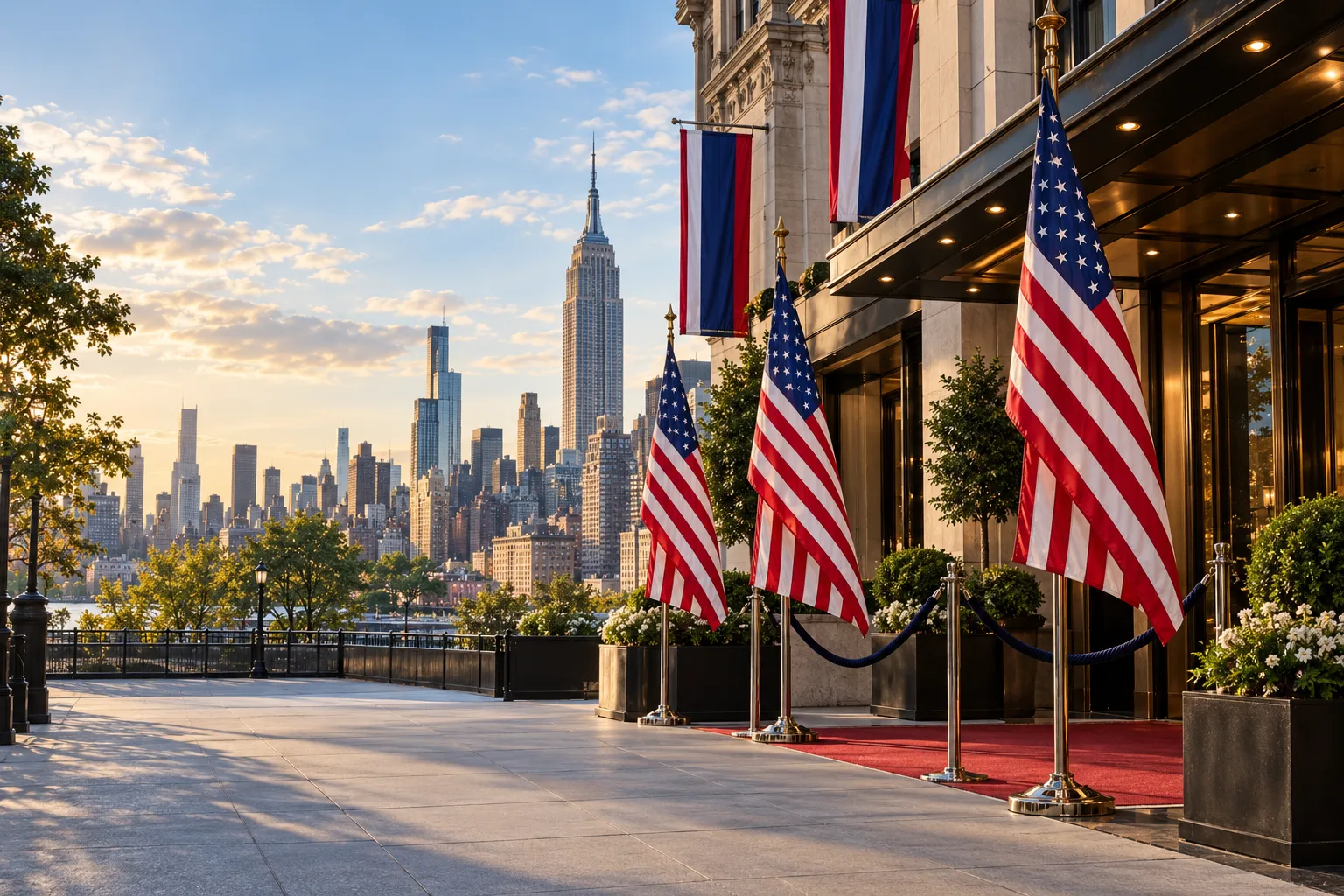
Flags for Hospitality in New York City.
Resorts, hotels, and guest arrival experiences. Designed around New York City operating conditions.
Create a polished arrival from curb or valet through reception, meetings, and guest-only destinations.
Dense streets, tall-building wind channels, waterfront exposure, and limited staging space make compact footprints and controlled placement essential.
How the New York City program should work
| Guest journey | Create a polished arrival from curb or valet through reception, meetings, and guest-only destinations. |
|---|---|
| Operating coordination | Coordinate receiving hours, valet flow, luggage routes, finish standards, and indoor overnight storage. |
| Local site conditions | Dense streets, tall-building wind channels, waterfront exposure, and limited staging space make compact footprints and controlled placement essential. |
| Seasonal plan | Plans need to handle humid summers, cold winters, coastal storms, and abrupt wind changes around towers and open waterfronts. |
| Hardware direction | Weighted low-profile bases, tightly controlled flag heights, and indoor backup positions are often the practical starting point. |
| Day-of priority | Protect pedestrian clear width |
Likely site contexts
Recommended rental systems
Planning basis: This guide applies publicly available regional weather context and site-planning principles; it does not claim completed work in New York City. Final hardware, permits, and placement require venue approval and a site assessment. Check current conditions with the National Weather Service and long-term context from NOAA U.S. Climate Normals.
Questions for Hospitality teams
Create a polished arrival from curb or valet through reception, meetings, and guest-only destinations. The local environment adds this requirement: Dense streets, tall-building wind channels, waterfront exposure, and limited staging space make compact footprints and controlled placement essential.
Coordinate receiving hours, valet flow, luggage routes, finish standards, and indoor overnight storage. For New York City, loading windows, sidewalk clearance, property approval, and pedestrian flow usually determine the installation sequence.
Plans need to handle humid summers, cold winters, coastal storms, and abrupt wind changes around towers and open waterfronts. The quote should identify who can pause, relocate, or remove each outdoor display.